How to improve the quality of a sparkling wine
Natural cork remains the material of choice for sealing wines. In fact, according to figures from Wine Business Monthly magazine’s 2020 Closure Survey Report, 66% of wine bottles around the world used this material, reflecting just how important it is in the wine industry.
This is especially relevant in the case of sparkling wines, whose special characteristics make their producers the largest consumers of cork in the industry.
What is natural cork and where does it come from?
Natural cork is a plant-based material that comes from the Quercus suber, the cork oak, a type of tree that is part of the Mediterranean fauna. In fact, 34% of the global area of this type of ecosystem is found in Portugal, compared to 27% in Spain, 18% in Morocco, and 11% in Algeria.
Natural cork acts as a layer to protect the cork oak tree from adverse weather, insulating and safeguarding its more sensitive areas. Vitally, it has regeneration properties, as the cork grows back once it has been harvested, without any damage being caused to the cork oak. This means that, unlike other production methods, its harvesting is totally environmentally friendly, since it not only does not endanger the tree, but also contributes to preserving its biodiversity.

In terms of its composition, at the microscopic level, cork has a structure in the form of polyhedral cells framed by a very flexible tissue. For this reason, it is a material that boasts a number of unique characteristics, as it is resistant and light, an excellent thermal and acoustic insulator, elastic, compressible, flame-retardant, and hypoallergenic. But above all, it is a 100% natural, biodegradable and renewable material.
It has a wide variety of uses, as it is used in the production of bottle stoppers, particularly for sparkling wines and cava, but it also used for the manufacture of floor and ceiling tiles, insulation material, sealing gaskets, and various soundproofing and decorative panels.
Natural cork stoppers in Catalonia: a traditional and leading industry
Given the large area of cork oak forests on the Iberian Peninsula, it is no surprise that Spain and Portugal account for up to 80% of global cork exports, producing a total of over 160,000 tons of cork each year (data from 2018).
The industry is especially prominent in Catalonia and, more specifically, in the province of Girona. All in all, the Catalan cork industry accounts for a total of 15% of cork production worldwide, harvesting over 4,000 tons of cork with an economic impact of more than 5 million euros.
And this is all using the same artisanal methods as over two centuries ago, especially because none of the mechanization projects have managed to be as effective as the traditional technique, which involves an axe and a lot of hard work.
However, besides the numbers, the Catalan cork industry also stands out for the great efforts and resources that have been devoted to research and development, through institutions such as the Catalan Cork Institute (ICSuro) and specialized associations like AECORK.

The importance of the Catalan Cork Institute
Some Catalan institutions have also sought to promote and boost the use of cork, even at the legislative level. So much so that the Catalan Cork Institute Foundation (ICSuro) has worked on numerous projects and campaigns with business owners and politicians in Catalonia advocating the importance of this compound in the circular economy. This in fact led to the enactment of a regional law in Spain that included cork stoppers among its recommendations.
The ICSuro has also participated in the coordination of several projects aimed at improving wine quality, particularly to combat problems related to chloroanisoles, such as the dreaded TCA, through the use of biosorbents and exhaustive checks.
Catalan sparkling wine as an engine to drive natural cork
Spain is the world’s fourth largest producer of sparkling wine, just behind Italy, France and Germany, with over 2 million hectoliters per year. This figure has doubled since the year 2000. The Cava Designation of Origin, popularly known as DO Cava, produces 52% of all sparkling wine in Spain.
The cork industry has benefited from the promotion of designations of origin and winegrowers’ associations such as Corpinnat, Conca del Riu Anoia, DO Penedès, etc., which has led to an increase in the production of quality cork stoppers for closing bottles of sparkling wine.

Main benefits for sparkling wine thanks to the use of natural cork stoppers
Natural cork stoppers have fundamental properties for preserving sparkling wine. They have been used since the 17th century, when they replaced stoppers made from wood or cane impregnated with oil.
In the case of sparkling wines, the cork stopper, once uncorked, is mushroom-shaped, with a conical lower body and ovoid upper body. This type of stopper provides a number of benefits for preserving wine properly, including:
- Porosity Natural cork stoppers allow in just the right amount of oxygen for the wine to age properly, without letting in other external agents such as bacteria or mold.
- Impermeability Natural cork does not allow the passage of moisture thanks to the suberin and all the wax it contains. However, it is not totally impermeable, as it allo
- Oxygenation Natural cork stoppers prevent excess oxygen entering the bottle, which would impair its quality. For sparkling wines, the recommendation is to oxygenate them as little as possible, since contact with air would destroy the bubbles that are so characteristic of this type of wine. Other materials such as plastic or screw caps have proven to provide excessive oxygenation, oxidizing the wine and resulting in a ripe apple flavor. On the other hand, some producers that sealed their products with totally leak-proof screw caps, particularly in regions like the US and Australia, have seen their products seemingly asphyxiated due to a total lack of oxygenation, which damaged the sparkling wine. Therefore, of all the existing closure methods, cork has proven to be the one that provides the most harmonious and balanced levels of oxygen to the wine, helping it to age optimally and naturally.
- Stopper pressure Sparkling wine stoppers are subjected to the high pressure exerted by the bubbles of carbon dioxide gas from inside the bottle, which amounts to approximately 6 bars of pressure. This is the reason why stoppers are recommended to have a diameter of up to 31 mm.
- Lightweight Since cork is made up of around 89.7% air, it is very lightweight. Cork stoppers weigh only about 0.16 grams per cubic centimeter, which makes it an ideal material for a closure system, since it facilitates transport and handling, resulting in a stopper that does not add extra weight to the bottle.
- Shape memory Cork has a natural ability to adapt that is known as “shape memory”; it retains for a time the shape to which it has adapted and gradually recovers the natural shape of the stopper.
- Wine maturation Thanks to the fact that both products are 100% natural and the close similarity of the components that make up cork and wine, they complement each other better than any other material that has been invented to date. Cork is the only material that guarantees optimum sealing and maturation through numerous physical and chemical processes. In the case of quality sparkling wines, cork plays an even more important role, as the fermentation of these wines usually occurs within the bottle, and the main element responsible for oxygenation and protection—as with the oak barrel for still wines—is the cork stopper. The quality of the stopper determines whether or not the wine will take on its best qualities as it ages. Only natural cork can ensure this balance that allows the correct aging of the wine, without interfering with the harmony of its components while also providing valuable notes for the end product.
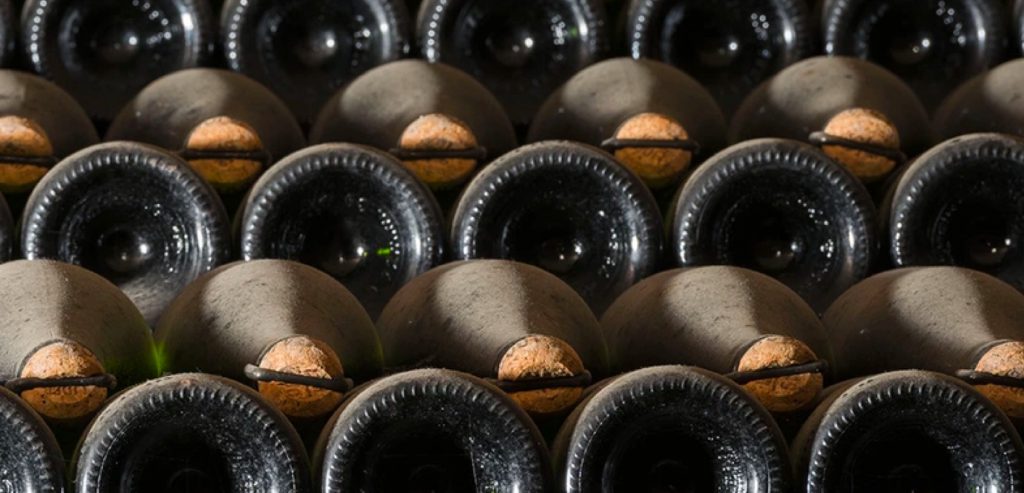
- Uncorking The uncorking of a sparkling wine sealed with a technical stopper made with natural cork discs is not only very simple, but it conveys a sense of occasion that evokes great pleasure. The joyous sound of uncorking a bottle of sparkling wine is unique and unlike that of any other wine.
Common problems with sparkling wine stoppers
Despite its excellent properties for preserving sparkling wine, the use of natural cork stoppers can also have some drawbacks. The most important of all is known as TCA, a chemical process that taints the wine and significantly reduces its quality. But this is not the only problem.
Chloroanisoles, TCA, TBA, and biomethylation
Trichloroanisole (TCA) and tribromoanisole (TBA) are two chemical compounds derived from chlorine found almost everywhere, even in the air.
TCA is triggered when a type of fungus comes into contact with a substance containing chlorophenol, resulting in the production of chloroanisole, a non-toxic substance suitable for consumption but which can alter the organoleptic characteristics of wine.
This problem is commonly known as “cork taint” and, although this has been blamed for many years as the cause of chloroanisole contaminations, in truth many other elements can cause this contamination, such as production tools, the bottle, the barrel, and even the air in the cellar.
While the incidence rate is very low (less than 4% of bottles worldwide), it is considered one of the most serious problems affecting wine production.
Problems with density, consistency, crumbling, and breaking
Cork stoppers in sparkling wines must be capable of withstanding high pressures of around 6 bar, while retaining their strength and resistance.
It is important that the density characteristics of the stoppers remain regular and stable, ensuring correct insertion and extraction for smooth bottling.
To this end, a number of exhaustive twist and breakage tests are conducted during production to ensure the correct density and consistency.
This is sometimes not easy to achieve, since natural cork stoppers require a set of basic storage conditions to prevent modifications due to external factors, such as the dryness of the environment or temperature changes.
In the case of sparkling wines, problems of cork stopper breakage essentially occur in the natural cork discs and are due to a poor selection of the raw material. However, these problems are rare and hardly ever occur at all.
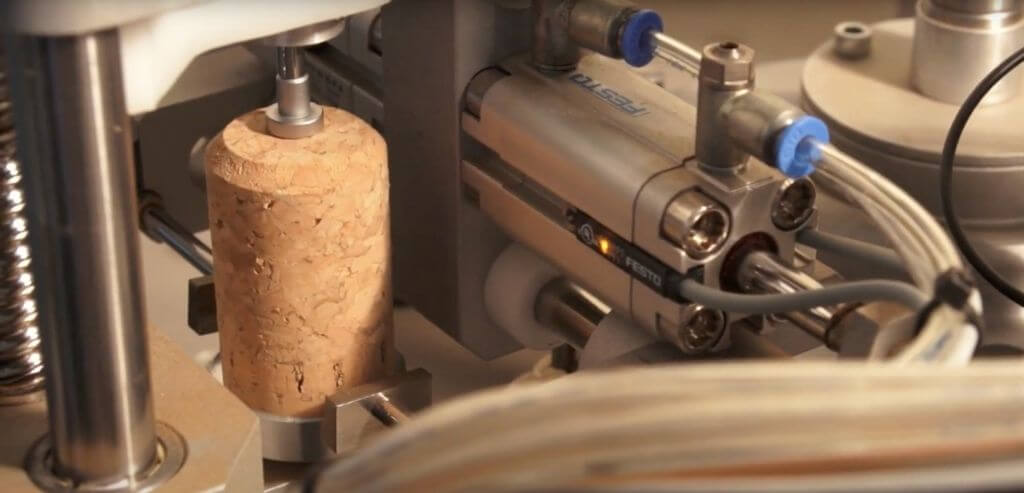
Problems with finishes and surface treatment
Since cork is a natural material, there are a number of defects that can be found in natural cork discs, some of which relate to the growth of the cork oak—such as indentations, galleries, crevices, and wood—and others related to the manufacturing process itself.
Some problems that sometimes arise in relation to finishing include:
- Breaks or irregular shapes in the contour of the discs due to wear or friction during manufacturing, especially during the polishing of the stopper.
- Marking errors on the stopper, for example if it is not centered on the exact point required or it was marked with insufficient pressure, making it difficult or impossible to see.
- Excess or lack of silicone applied in the final siliconization process for the lubrication of the stopper.
However, certified quality producers can guarantee a consistent quality of finish for a product that fits the bottle and is free from imperfections.
Precision problems
Sometimes the stopper dimensions offered by the producer are not exact and can pose problems on the bottling line, especially at industrial bottling plants of large producers where precision is to the millimeter and any variation can cause delays, incidents, and economic losses.
But today’s industry is able to offer absolute guarantees of precision in the molding of the agglomerated body of the stopper, resulting in smooth and error-free bottling.
Nowadays, the vast majority of producers offer high quality stoppers and can advise you on the right dimensions for your bottle. Always make sure to purchase your stoppers from a quality supplier that guarantees a final dispatch analysis with accurate characteristics and measurements.
Selecting the ideal stopper for sparkling wine
Choosing an ideal stopper can be somewhat complicated in the case of still wines, with their wide range of varieties, characteristics, and prices.
On the other hand, it is more straightforward for sparkling wines like cava, corpinnat, and champagne, with a choice between two main options: natural cork stoppers with single or double discs.
In the case of cider and low-cost frizzante white wines, microgranulate cork stoppers and aluminum screw caps tend to be the respective closure systems.
But to select a good stopper for our wine, we must consider different factors, such as the type of quality of the wine, when it will be enjoyed, the degree of airtightness and treatment it needs, or what price range are we going to set for our product and what customer perceived quality are we after.
These variables determine the type of stopper we need. The most common types in the industry are:
Stopper made with two natural cork discs
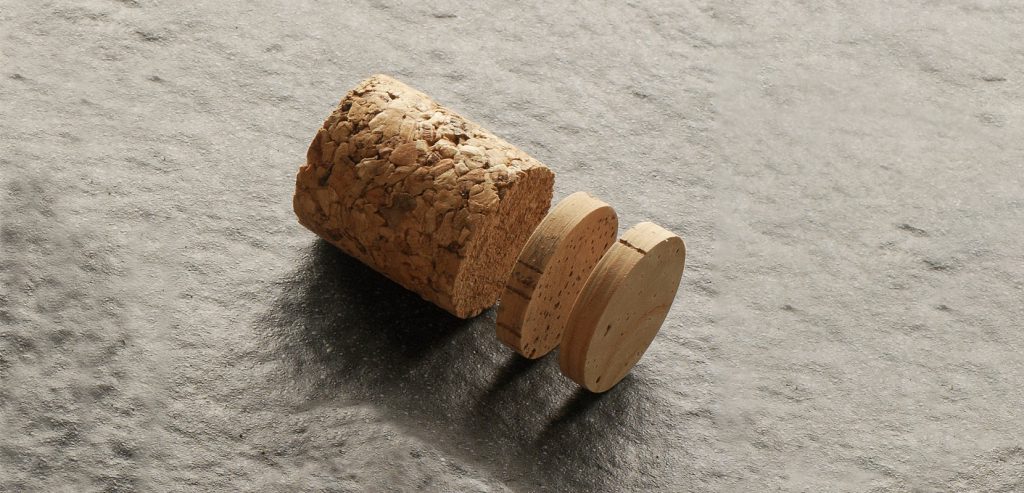
The king of sparkling wine stoppers. This stopper is composed of a body or handle made of different sized granules, depending on the supplier we choose. Two natural cork discs are attached to the lower end of the stopper, which is in contact with the wine. These discs prevent the wine from coming into contact with the agglomerate body of the stopper and ensure the wine ages properly.
This is the highest quality sparkling wine stopper; it is designed to create a sealed space within which the wine is only in contact with 100% natural materials, which help the wine’s natural aging and also provide aromatic notes that are highly appreciated by experts.
This type of stopper provides ideal gradual and regular oxygenation, while retaining the carbon dioxide that the wine needs in order to age inside the bottle.
In technical and organoleptic terms, it is the best stopper on the market today, and it is associated with quality sparkling wines intended to remain in the bottle a long time, providing the best conditions even several years after being bottled.
Some examples of products that usually use this closure system include:
- Champagne
- Cava
- Corpinnat
- Blanquette de Limoux
- Clairette de Die
- Prosecco
- Asti Espumante
- Franciacorta
Stopper made with a single natural cork disc
A very similar system to before, but with just one natural cork disc attached to the lower end.
It offers slightly inferior characteristics to the double natural cork disc stopper, such as the smaller natural barrier between the wine and the agglomerate body of the stopper, its oxygenation volume (proven to be lower), or its expansion when uncorked, which results in a less aesthetic shape recovery than the double-disc stopper.
This stopper creates a safe and 100% natural environment ideal for generating the correct sensory impression in the maturation of quality sparkling wines.
It is often chosen for not so high quality lines or by producers looking to adjust purchase prices without compromising quality. Many types of wine that use single disc stoppers often use this model for specific qualities or vintages. Some products that use this stopper most frequently include:
- Crémants
- Gaillac mosseux
- Fragolino
- Lambrusco
- High quality sparkling cider

Microgranulate stoppers
Microgranulate stoppers are produced from treated cork granules. They are uniform in shape because the agglomeration process is carried out with artificial glues that bond a type of small cork granule of medium or low quality, usually derived from waste and offcuts. These stoppers are not usually used for quality products since the sparkling wine is in direct contact with glues and artificial additives which, due to the high pressure exerted by the carbon dioxide gas, tends to break down cork microgranules and introduce some of the artificial glues into the wine’s composition.
They are mainly used for wine to be consumed immediately or soon after manufacture, as the wine is in contact with the glue that binds the agglomerate. Although it is perfectly safe, it does not offer the ideal characteristics for the maturation of the wine and, therefore, this type of stopper should never be chosen for high quality wines or wines that are not going to be consumed quickly.
Some sparkling wines that often use this type of stopper include:
- Charmat
- Sidra
- Medium quality sparkling cider
Microgranulate stoppers treated with supercritical CO2 fluid
A microgranulate stopper treated with supercritical CO2 is a stopper made of cork granules pressure treated with supercritical CO2 fluid, which washes or removes over 150 particles that can be considered negative.
This fluid is obtained by subjecting CO2 to a specific pressure and temperature, which results in a hybrid state of this element with characteristics of both a gas and a liquid. This type of chemical treatment is very common in the food industry, and it is now used to process cork for this type of stopper.
During this washing process, many substances that can be problematic are removed, but it also takes away many of the cork’s properties.
This aggressive washing process results in a modified material called “cork powder”, to which plastic microspheres must be added in order to provide the natural elasticity of cork.
For the final construction of this stopper, the resulting cork powder must be agglutinated with polyurethane glues to give it sufficient consistency for the closure. There are still no conclusive studies on the possible harmful effects of microplastics injected into the stopper to give it the elasticity of natural cork. Therefore, the effects they may have on wine and on the health of consumers is unknown. We must not forget that with this type of stopper, the sparkling wine is in direct contact with the artificial glues and plastic microspheres added.

Plastic and synthetic stoppers
Sometimes plastic or silicone stoppers are used, which allow for a wide range of colors and flexibility in terms of shape, features that natural cork stoppers do not possess.
However, their main drawback is that they are totally airtight, which suffocates the wine, as there is zero air circulation with this type of stopper. In addition, consumers generally perceive this type of closure as lower quality than natural cork stoppers. As a result, they are mainly used in sparkling wines intended to be consumed quickly or in mid- to low-range product lines looking to be competitive on price.
Metal screw cap
The screw cap is characteristic of fortified wines, newly created wines or wines from newer international markets with little experience. It is also used in smaller bottles of cava or champagne, specially designed for transport on airplanes, for example.
This type of stopper is the lowest quality of all due to its characteristics and materials that cause an unbalanced oxygenation of the product—either because they allow for the excess entry of air that oxidizes sparkling wines, resulting in a characteristic ripe apple flavor, or because they are totally airtight and suffocate the wine and disturb its aging process.
It tends to be used in newly created wines, wines for quick consumption, or wines from new markets.
Cork stopper with discs to enhance the quality and value of your sparkling wine
The use of a stopper with natural cork discs enriches the aging and organoleptic profile of sparkling wine, providing a sensory experience that offers incalculable added value.
Wine maturation
Natural cork stoppers provide the best conditions for the correct aging and maturation of sparkling wine. They provide the amount of oxygen necessary for proper preservation, while preventing the escape of the precious carbon dioxide gas produced during maturation.
More specifically, the system with two natural cork discs offers optimum maturation and preservation. Not only this, but it offers numerous benefits and aromatic notes that make it better quality and higher value.
Consumers and critics
The opinion of consumers is almost unanimous: they prefer natural cork stoppers for sparkling wines because of their excellent characteristics for preserving their properties.
A study conducted by CORK on the habits and perceptions of Spanish consumers of wine and cava and their types of closures found that 97% of consumers preferred cork stoppers for wine and cava bottles.
The main reasons for this choice are the fact that cork is natural and recyclable, in addition to it being beneficial to the preservation and aging of sparkling wines. Moreover, natural cork stoppers are perceived as a symbol of prestige and status, reserved for the highest quality sparkling wines.
Uncorking
The feeling of uncorking a bottle of sparkling wine sealed with a natural cork stopper cannot be compared with that of a plastic or silicone stopper. As well as the pleasing sound, it evokes a festive atmosphere associated with Christmas or other traditional celebrations.
Plus, serving a sparkling wine is no casual matter, as the uncorking is very important. It is not a mere ritual, but a moment that enhances the tasting, a psychological component that increases the consumer’s enjoyment and appreciation of the wine to the fullest.
Commercial benefits of cork
Cork is undoubtedly the material most used by producers and appreciated by consumers. This is shown in numerous studies and opinion surveys. Today we know that:
- In the USA, 97% of consumers associate the stopper with high quality wines (Wine Opinions, July 2017).
- In China, 97% of consumers claim that cork benefits the aging of the wine (CTR, September 2017).
- In Spain, 95% of consumers choose cork stoppers as their preferred closure system for wines and sparkling wines (Iniciativa CORK, July 2017).
- In Italy, 86% of survey participants claim that cork is a guarantee of a quality wine (Gfk, July 2017).
- In France, 83% of French consumers prefer natural cork stoppers (Opinion way, June 2017).
There are also various studies, such as those by Nielsen in 2017, showing that profit margins can be bigger when using cork as the closure system.
- +€3.35 in the USA – Nielsen, June 2017
- +€4.45 in China – Nielsen, May 2017
- +€2.30 in Spain – Nielsen, May 2017
- +€1.72 in the UK (retail) – Nielsen, July 2017
- +€6.05 in the UK (trade) – 17% increase in sales value in 2016 compared to 9% for artificial stoppers. CGA, July 2017

Producers and markets also clearly show their opinion on cork as the preferred closure system:
- Currently 7 out of 10 bottles of wine use cork closures – CORK, July 2017
- 92% of the Top 100 best-selling wines in Spain are sealed with natural cork – Nielsen, May 2017
- 95% of the Top 100 best-selling wines in China are sealed with natural cork – Nielsen, May 2017
- 89% of Wine Spectator’s Top 100 wines are sealed with cork – Wine Spectator, December 2016
- 72% of the Top 100 premium wines in the USA are sealed with cork – Nielsen, June 2017
- 8 out of 9 of Global Rosé Masters’ highest rated rosé wines are sealed with cork – Drinks Business, August 2017
- 69% of the winning wines at the Decanter World Wine Awards are sealed with cork – Decanter, 2018
The closure is also considered an essential element that forms part of the consumer experience, especially in sparkling wines. A study by the University of Oxford (June 2017) concluded that:
- Cork-sealed wine is more appropriate for celebrations (+20%) and is associated with a festive mood (+16%) – Charles Spence, University of Oxford, June 2017
Safety and quality. Combating TCA
TCA has become one of the main challenges in the wine industry. Although cork is not the sole cause, it is commonly associated with this molecule, and the term “cork taint” is used to refer to the presence of cork in sparkling wines.
It is a real problem and has already cost the industry millions of dollars in losses. Therefore, every company is researching different approaches to eradicate TCA for good. The Catalan cork sector is also a world leader in research and innovation coordinated by the Catalan Cork Institute (ICSuro).
Cork Mark: International Code of Cork Stopper Manufacturing Practices
Cork Mark is the international symbol that serves as the standard for identifying cork or cork products. It is a mark of excellence and prestige created by the European Cork Federation, which identifies bottles with cork stoppers produced under the strictest quality controls.
The wine industry can use this code free of charge, with prior authorization from the European Cork Federation.

Systecode system and certification
Systecode was created in the year 2000 as an external control and accreditation system established by the European Cork Federation. Its function is to certify the techniques carried out by producers as set down in the International Code of Cork Stopper Manufacturing Practices.
Biosorbents
Biosorbents are natural materials available in large quantities that, when applied to the wine industry, are intended to remove unwanted aromas from cork stoppers. For some time now, there have been several initiatives aimed at using biosorbents in cork stoppers.
In Spain, a group of Catalan wine and sparkling wine cork stopper production companies is spearheading different research projects to improve the quality and competitiveness of their products. One such project is “Go Biosorbentes”, which promotes the use of adsorbents and biosorbents to retain unwanted aromas in the production process for subsequent removal. This project is coordinated by the Catalan Cork Institute (ICSuro).
Research and development
Since the 1990s, the cork industry has been known for its strong commitment to research and development. In fact, cork stoppers manufactured in Catalonia continue to be world-leading in excellence and innovation.
The Catalan Cork Institute (ICSuro) has been the research hub responsible for coordinating a number of these initiatives, including the aforementioned “Go Biosorbentes” and “Go Permeabilidad”, which aim to improve the cleanliness and oxygenation capacity of natural cork stoppers.
The major challenge facing the industry today is combating TCA and global warming. Over the last century, the industry has gone the extra mile to include the highest quality machinery and analysis methodologies in its processes and facilities in order to offer safe and uniform products.
Natural cork and its benefits to combat global warming
Natural cork is not only an ideal product for sparkling wines. It is also a powerful ally in the fight against global warming and it actively combats it thanks to the many positive effects the material and this industry have on the planet.
In short, every cork stopper captures 112 grams of CO2. A plastic closure emits 10 times more, and an aluminum capsule emits 24 times more (Source: PWC).
This is why when we talk about its main benefits, we cannot ignore its sustainable and environmentally-friendly impact—something that is more important than ever today, as we find ourselves, now in the 21st century, grappling with man-made climate change.
Some of the reasons that make cork a sustainable, eco-friendly, and enduring material include:
- Cork is a 100% natural product Natural cork is, as the name suggests, a product that comes 100% from nature, making it biodegradable, recyclable and, therefore, completely sustainable.
- Fully sustainable production Natural cork is stripped from the cork oak by hand using artisanal techniques, without the need for felling or other industrial processes, with the tree suffering zero damage. Therefore, harvesting cork is 100% sustainable and environmentally friendly.

- Carbon sequestration Cork oak forests absorb more carbon dioxide than other types of forest, giving this industry a negative carbon footprint that ensures a positive impact on the planet.
To produce a natural cork stopper, the cork industry emits fewer harmful gases than it sequesters thanks to maintaining the forested areas where the raw material is harvested. In other words, it stores more CO2 than it emits. This means that cork is a material that helps combat climate change.
- Carbon footprint The carbon footprint of the cork industry is negative, which means that it sequesters more CO2 than it emits into the atmosphere. According to a recent study by the School of Agriculture, the cork oak tree has a carbon sequestration capacity of up to 14.7 tons per hectare per year. For example, the cork oak forests of the Mediterranean alone, with a surface area of some 2.2 million hectares, store almost 30 million tons of CO2 per year
- Prevents desertification Well-managed cork oak forests provide important environmental services that help slow desertification and the consequent loss of animal and plant species.
- Retains water The presence of forests on riverbanks stabilizes the banks and prevents flooding, as they absorb a greater amount of water than bare soil. As such, the vegetation can be kept in balance, which guarantees an adequate water cycle.
- Helps protect endangered species Cork oak forests are home to the greatest biodiversity of wildlife in Europe and, naturally, in the Iberian Peninsula. However, many of the species that live there are in danger of extinction. Harvesting cork is one of the best ways to preserve and improve this vast natural ecosystem.
How to select a suitable supplier for sparkling wine cork stoppers
When it comes to selecting a suitable supplier for sparkling wine cork stoppers, you need to keep a few important aspects in mind:
- A company with a tradition of cork production: cork harvesting and the manufacture of stoppers is a centuries-old tradition, particularly in some specific areas of Spain. One of the main places is Palafrugell (Girona), a town that, since the 18th century, has been a pillar of the Catalan cork industry, which was first artisanal and then fully industrialized from the 19th century onwards.
- A specialized company, focusing on what it does best: producing natural cork stoppers for sparkling wine. This specialization offers a singular guarantee of durability thanks to a stopper design developed a number of years ago.
- A reliable company across the board, from extraction to distribution. One the one hand, because it sources the best corks in the world, such as those from the Iberian Peninsula—birthplace of the world’s cork tradition—and, on the other, because it takes great care at all stages of the process in the factory, from granulate analysis and electronic inspection through to the selection of natural cork discs..
- A company that complies with the most stringent quality standards and offers this guarantee with quality seals accrediting its sound practices, especially when it comes to avoiding the presence of bacteria and fungi.
We hope you now have a better understanding of the many qualities of cork as a closure system for wine and sparkling wines, and are aware of our responsibility and commitment to choosing natural materials that help curb the dangerous global warming of our planet.

If you would like more information, please get in touch with us. We would be delighted to help you.