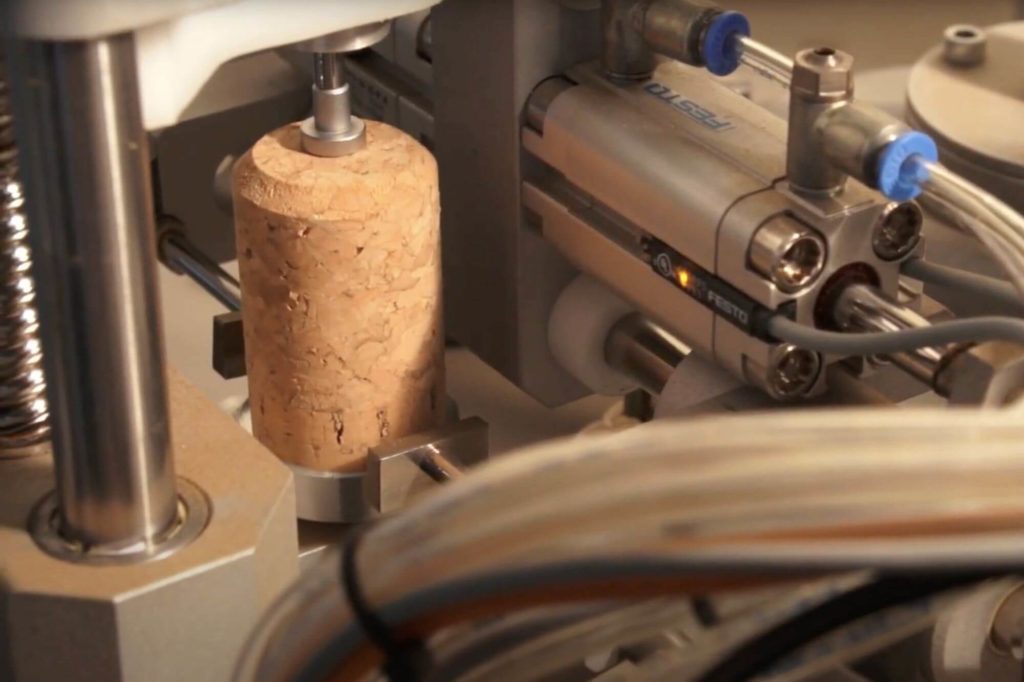
When opening a bottle of sparkling wine, we all take for granted what the experience and the ideal quality must be for the product to be in excellent condition when consumed. But sometimes surprises can occur in relation to the cork stopper used that negatively affect the experience and even the quality of the wine itself.
Usually, problems with cork stoppers are due to improper storage, poor manufacturing processes, or the quality of the material used. This can cause crumbling and breaks in the cork stoppers of sparkling wines, which are very upsetting for the consumer.
The properties of cork as a stopper for sparkling wines
Since the 18th century, cork has proven to be the most suitable material for preserving wine properly. It is almost perfect for sealing all types of sparkling beverages, but has particularly important properties for sparkling wines. These wines are generally sealed with these so-called technical stoppers, composed of an agglomerate cork handle and discs of natural cork.
Among its most important properties, the following stand out:
- It is a very lightweight and elastic material.
- It has very high compressibility.
- It is impermeable to the transfer of liquids and gases, but allows the gradual oxygenation of the bottle..
- It is thermally insulating and thermostable.
- It provides excellent adhesion to glass.
- It is a harmless material and prevents the quality of the wine from degrading.
- It contributes to enriching the organoleptic profile of sparkling wine.
In general, cork stoppers prevent the oxidation of sparkling wine and preserve its properties over time, guaranteeing its proper aging in the bottle.
Common problems related to the material
Despite their excellent characteristics for preserving and maturing sparkling wine, the truth is that cork stoppers also pose a series of problems, especially if their quality and storage have not been properly controlled.
Therefore, and with the aim of achieving the greatest safety in bottling and creating a product of the highest quality that meets all expectations, we need to fully understand the types of errors that can be found in cork stoppers, since detecting them quickly makes all the difference. Here are some of the most common problems:
Breaks when uncorking
Breakage of the stopper must be avoided at all costs, since the risk arises if the consumer attempts to remove the piece of the stopper remaining in the bottle of sparkling wine with a corkscrew.
Cork stopper breakage is due to poor agglomeration of the agglomerate body or poor adhesion of the discs. There are also factors that alter the quality of the stopper, such as excessive storage time outside the bottle or inadequate humidity and temperature.
Difficult uncorking
The uncorking of a sparkling wine is an art in itself. As well as evoking a festive atmosphere typical of celebrations and special moments, it has to be done in the right way so as not to damage the sparkling wine.
However, sometimes it is the quality of the cork itself that causes difficulties when uncorking. This is essentially down to poor application of the surface treatment of the stoppers and incorrect density of the stopper agglomerate body.
Pressure loss
A poorly made agglomerate body can lead to the stopper exerting the wrong force on the neck of the bottle.
When the agglomerate body has not been manufactured to the necessary quality standard, or it is undersized, it fails to adequately seal the sparkling wine, allowing the vital carbon dioxide to fully or partially escape. If the bottle is not sealed in the perfect conditions, this also allows the entry of oxygen into the bottle, causing the wine to oxidize very quickly. For this reason, it is vitally important to use a closure that fits the neck of the bottle perfectly.
Crumbling of technical stoppers
This problem derives from the flaking of cork particles, which in the case of microgranulate stoppers originates from the agglomerate body itself and, in the case of stoppers with natural cork discs, from the breakage of the discs.
Breakage of natural cork discs
Since cork is a natural material, there are a number of defects that can be found in natural cork discs, some of which relate to the growth of the cork oak—such as indentations, galleries, crevices, wood, among others.
The sorting of raw material at the preparation stage is the key process for discarding pieces of suboptimal quality.
Kay points to remember
Selecting optimal quality material reduces these problems to a minimum. A certified-quality supplier provides stoppers that do not exhibit these problems thanks to extensive testing and material sorting carried out during the manufacturing process.

For this reason, at TESA we scrupulously select the raw materials used and carry out the most exhaustive quality checks at all stages of the process. We specialize in the production of stoppers for cava, champagne and sparkling wines with a process that guarantees the homogeneity and ideal technical quality of our products, and ensures consistent quality results.
If you would like more information, please get in touch with us. We would be delighted to help you.